Your child doesn’t make eye contact — and the first question that comes to mind is: “Is this Autism?” This is one of the most common concerns among Indian parents of young children. But here’s the truth — avoiding eye contact alone is not a sign of Autism. There are many possible reasons. In this article, we’ll understand when it’s normal, when to be concerned, and what you can do at home.
Why Is Eye Contact Important for Child Development?
Eye contact is a key part of social communication. When a child makes eye contact, they are signalling that they are present, engaged, and understanding the other person. But this is a skill that develops naturally over time — earlier in some children, a little later in others.
Normal Eye Contact Development — By Age
| Age | Expected Behaviour |
|---|---|
| 0–3 months | Begins to follow the mother’s eyes |
| 3–6 months | Smiles at familiar faces, makes eye contact |
| 9–12 months | Joint attention — looks at an object, then looks back at you |
| 12–18 months | Points to show you things, checks your reaction with eye contact |
| Naturally makes eye contact during conversation |
What Are the Other Reasons a Child Avoids Eye Contact?
Eye contact avoidance is not always linked to Autism. Here are other common reasons:
| Reason | What Happens |
|---|---|
| Shyness or Anxiety | Some children are naturally introverted or shy |
| Sensory Sensitivity | Direct eye contact can feel overwhelming to some children |
| Excess Screen Time | Reduces face-to-face interaction, affecting eye contact habits |
| Social Anxiety | Avoidance in new environments or with unfamiliar people |
| Hearing Issues | If hearing is affected, focus shifts away from the face |
| Autism (ASD) | Only relevant when multiple other signs are also present |
When Should Parents Be Concerned About Eye Contact?
| Normal — No Concern | Concerning — Consult a Doctor |
|---|---|
| Avoids eye contact with strangers | Does not make eye contact even with parents |
| Gets distracted when busy playing | Does not respond when name is called |
| Shy around new people | No pointing, no social smile |
| Occasionally avoids eye contact | Repetitive behaviours present alongside |
| Focused while playing independently | Language regression — stopped speaking words they used before |
How Can Parents Encourage Eye Contact at Home?
These simple games naturally encourage eye contact in children — without any pressure. KidsWorksheetLab has specially designed Eye Contact Exercise Cards for children with Autism:
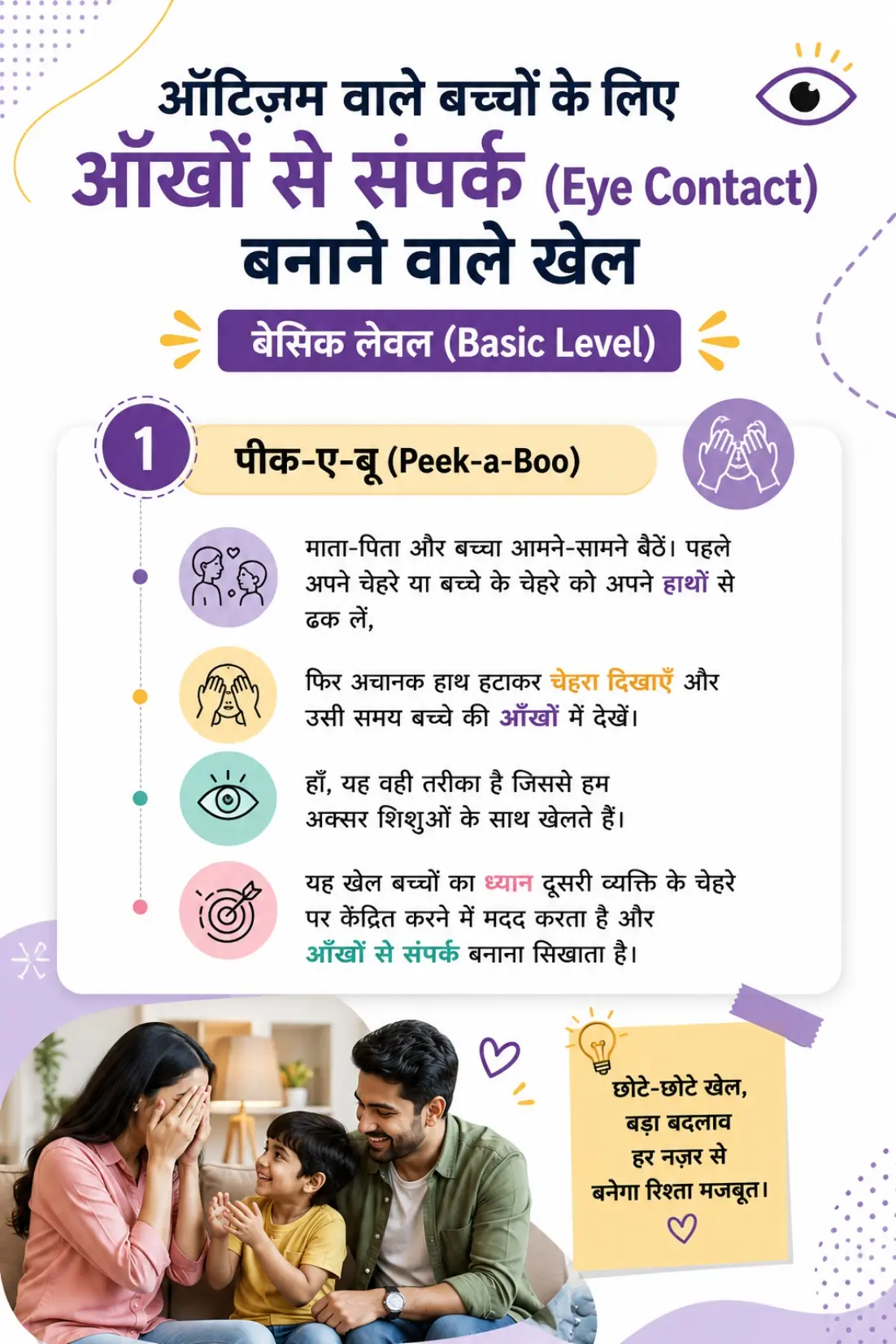
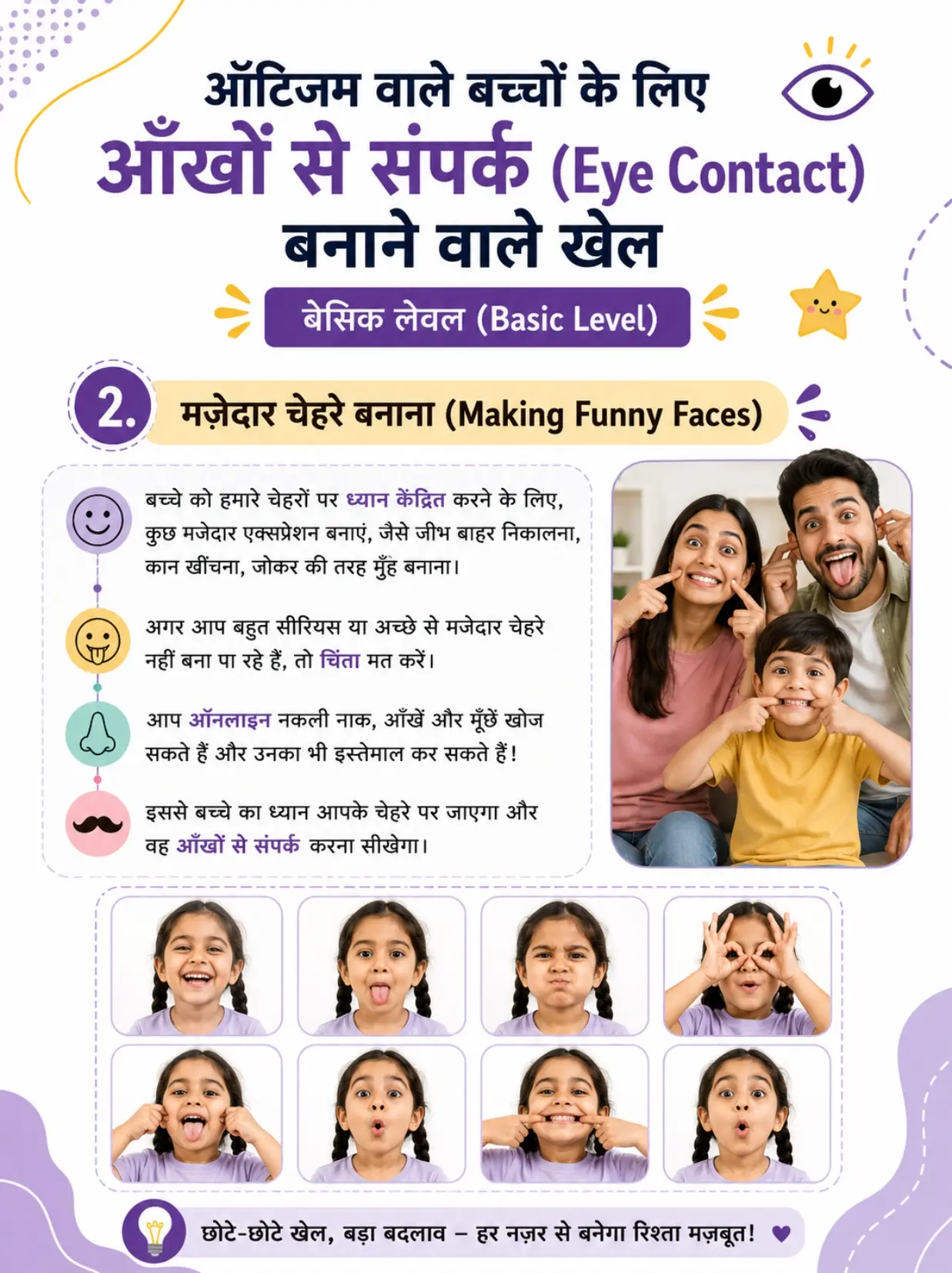
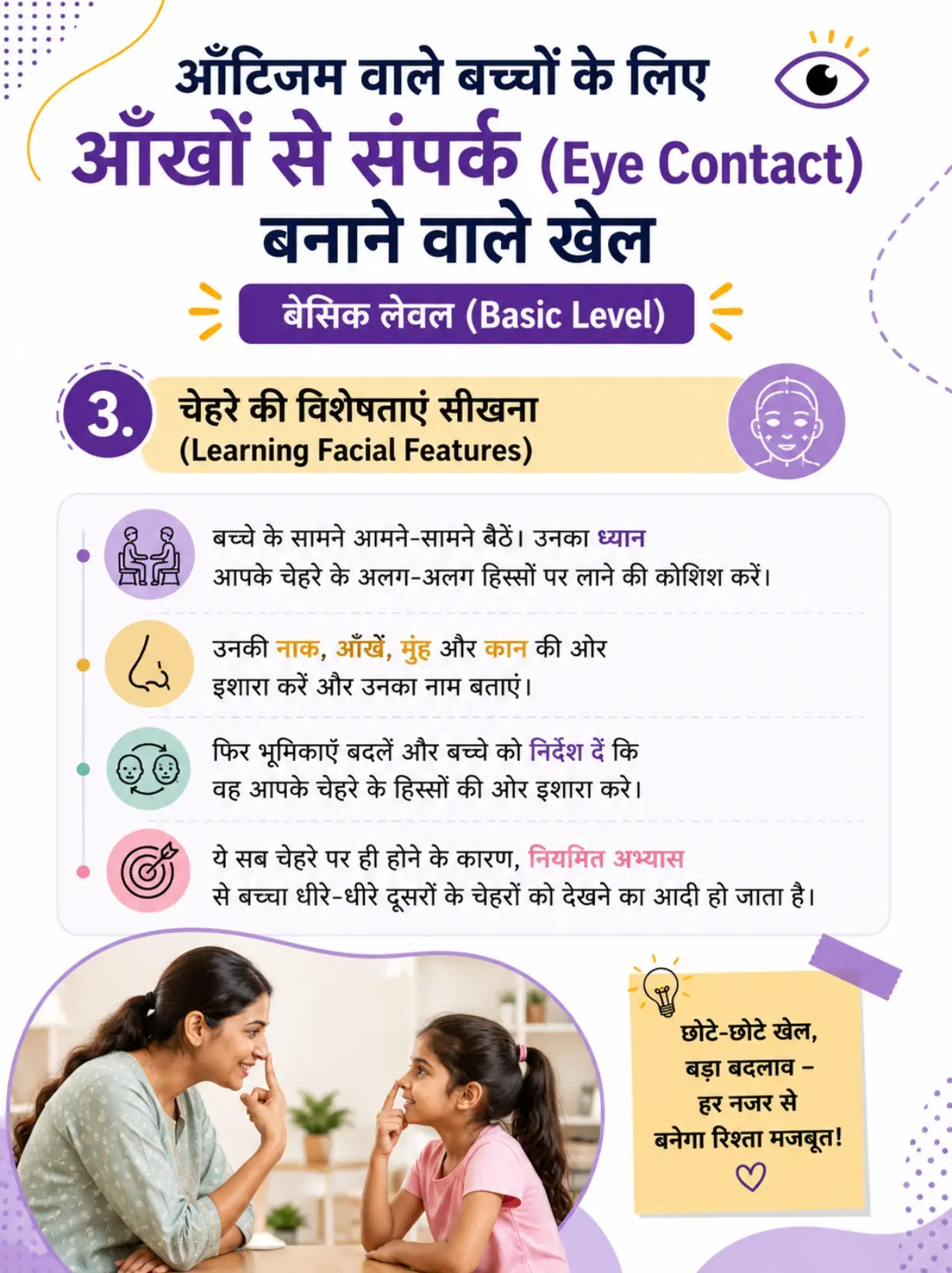
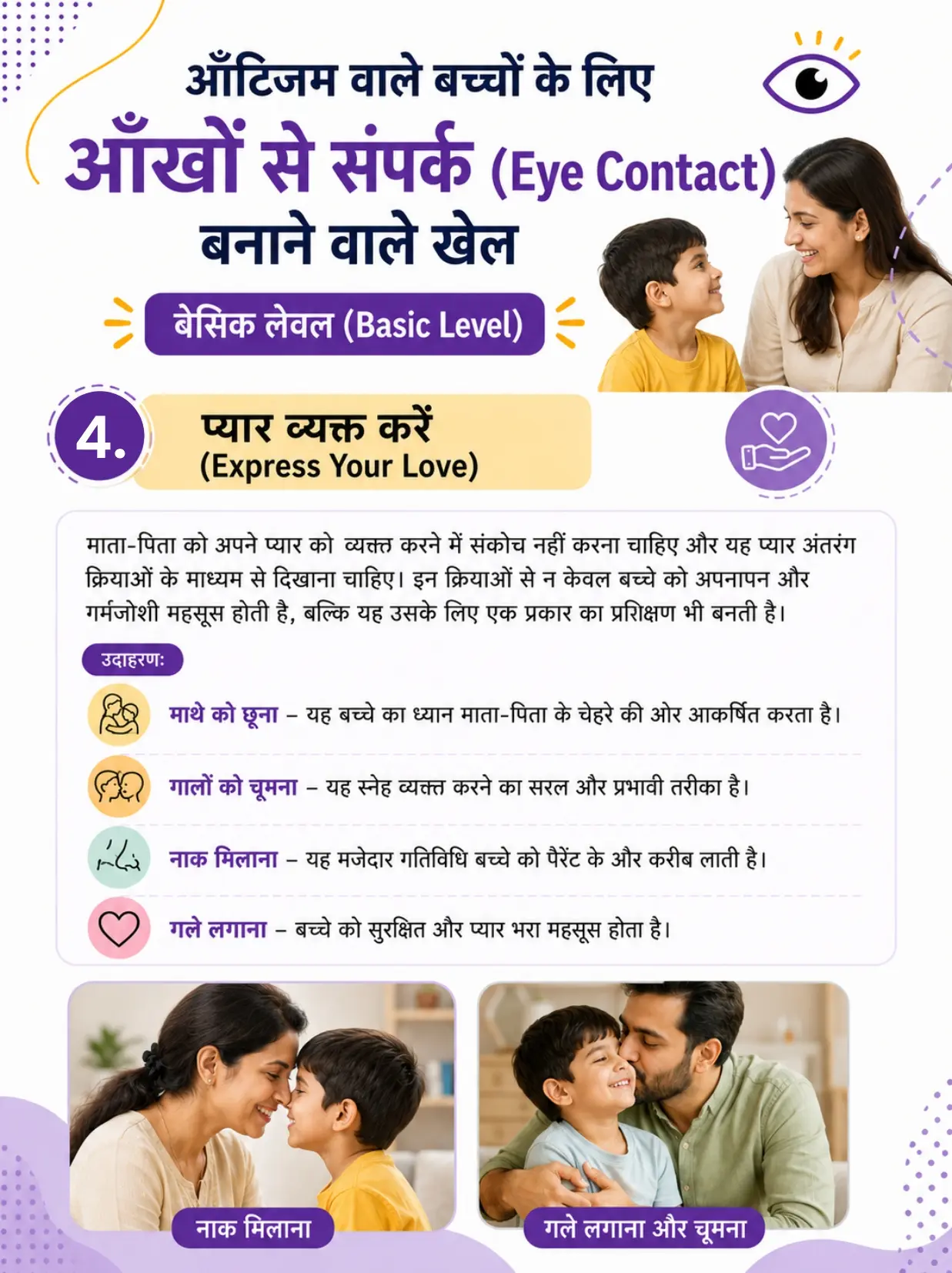
👆 Peek-a-Boo • Funny Faces • Facial Features • Express Love — Basic Level Games
🧩 KidsWorksheetLab Autism Resources: Communication Cards, Activity Worksheets and much more — specially designed for Indian parents. Printable resources available with subscriber access!
👉 Explore Autism ResourcesWhat Can Parents Do? — 4 Practical Tips
1. Invite Eye Contact — Don’t Force It
Repeatedly saying “look at me” or “look in my eyes” can make a child avoid eye contact even more. Instead — get down to your child’s level, position yourself in front of them, and engage naturally. Eye contact will be invited, not forced.
2. Use Games to Build the Habit
Peek-a-boo, funny faces, bubble blowing — these are all activities where a child naturally looks towards you. Every time they make eye contact, respond warmly — this acts as positive reinforcement and encourages the behaviour.
3. Review Screen Time
For children under 2, screen time should be avoided entirely. Excessive screen time reduces face-to-face interaction, which directly affects the development of eye contact skills.
4. Get a Professional Assessment — At Least Once
If you have any concern — even a small one — meeting a Speech Therapist or Developmental Paediatrician once is the best step. Early assessment brings peace of mind, and if there is something to address, early help makes a real difference.
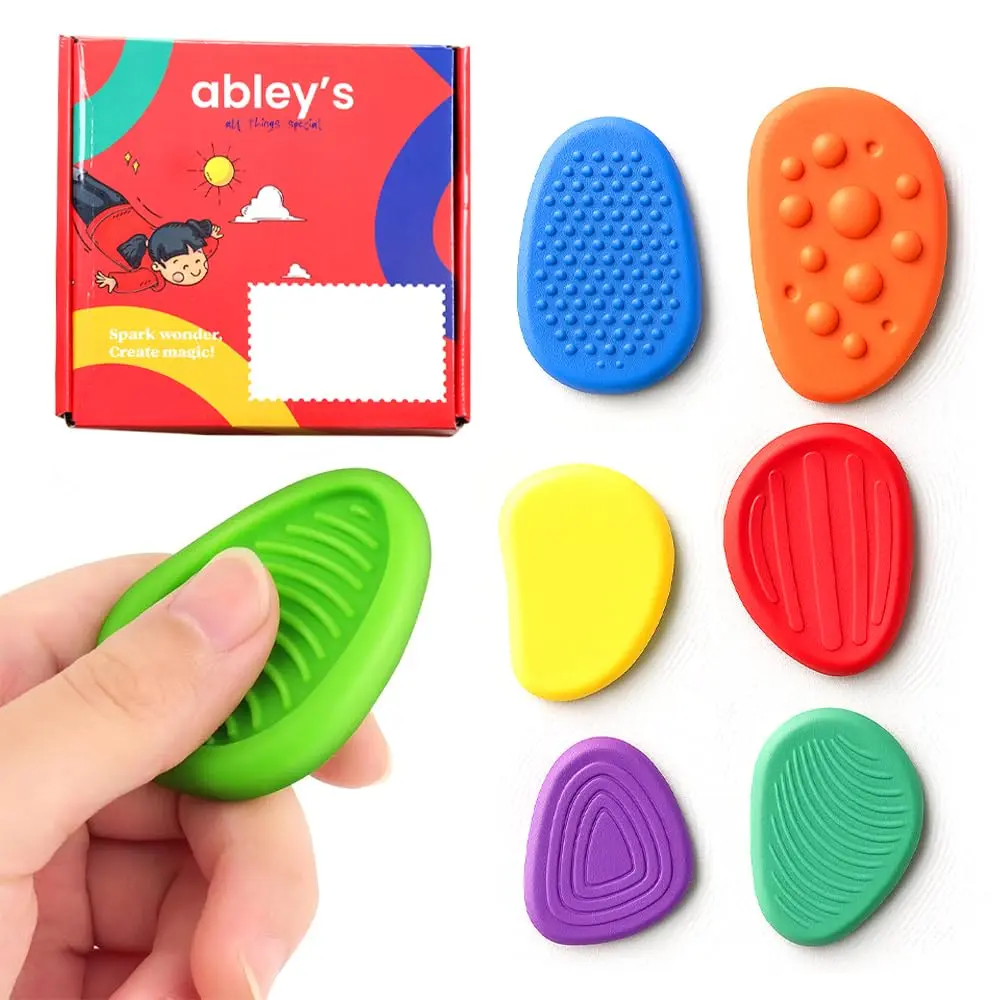
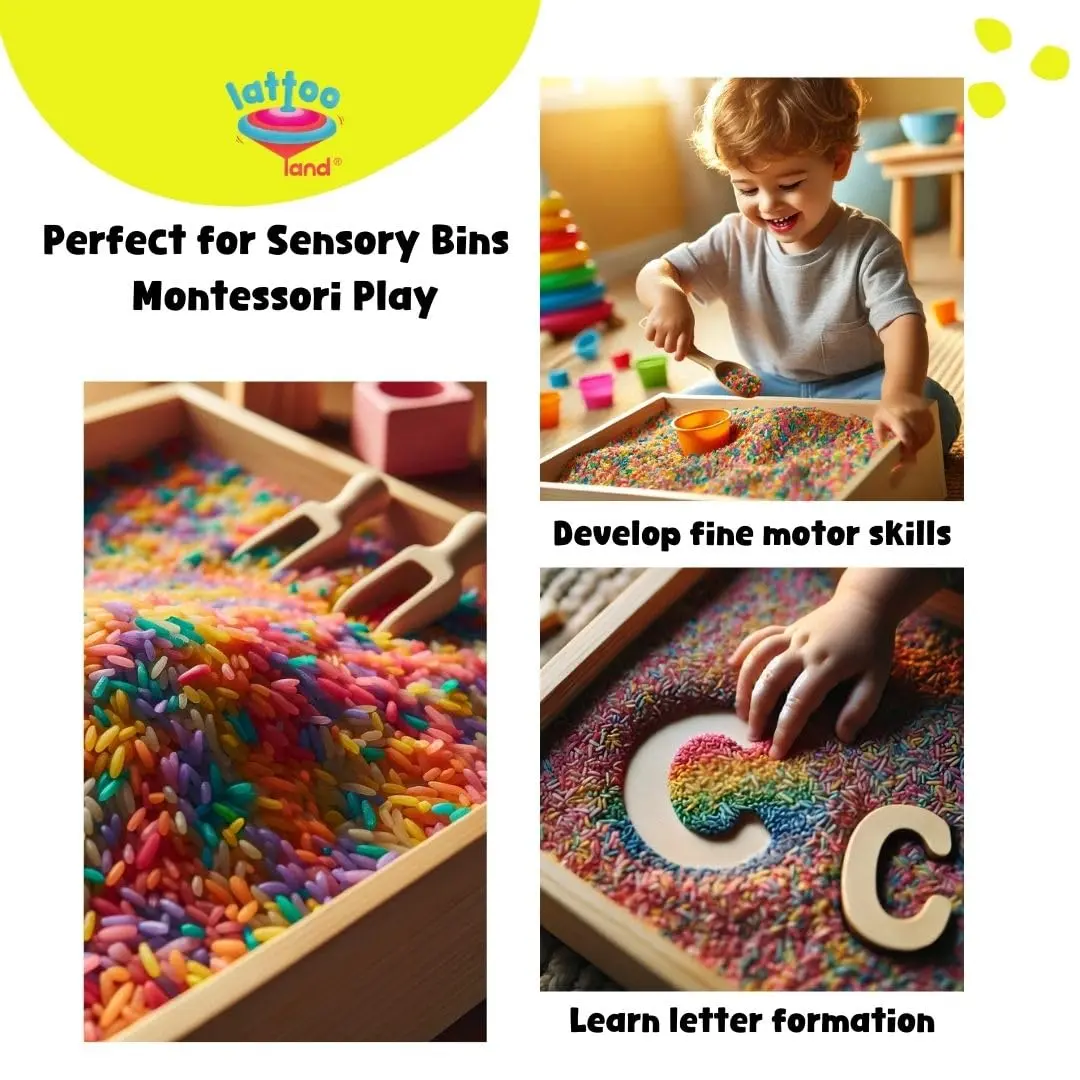
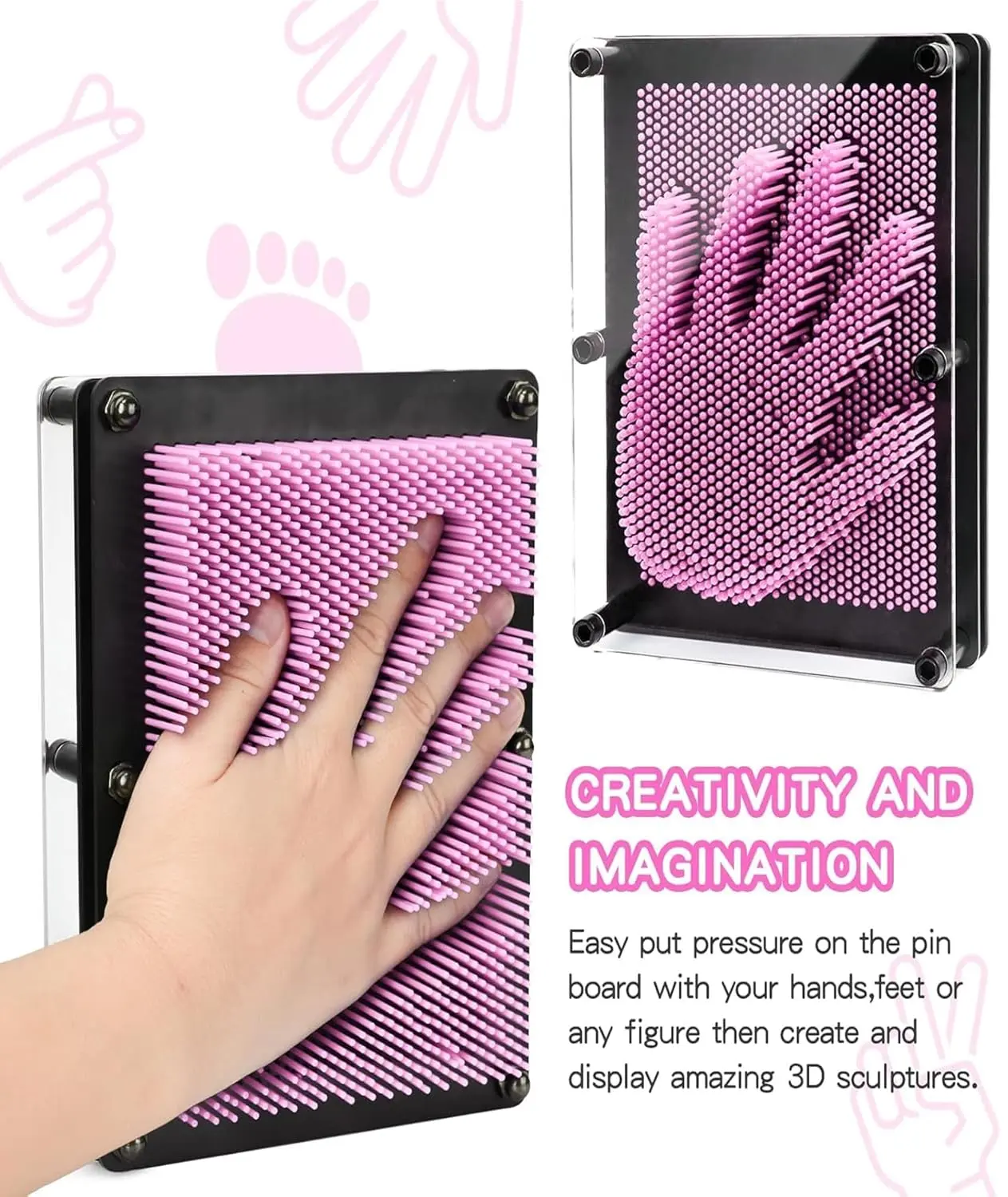
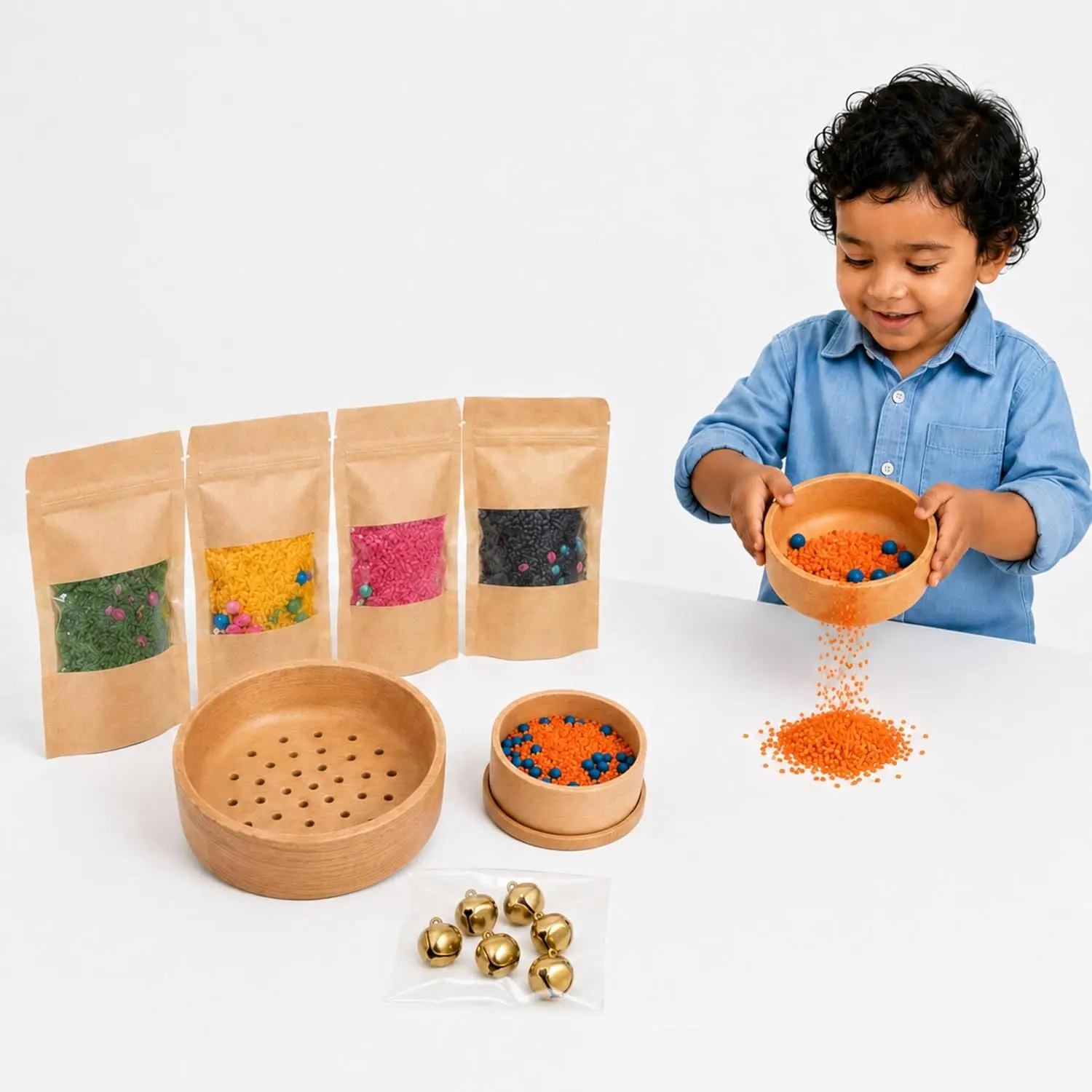
Helpful Sensory Tools for Children with Autism
Some helpful sensory tools you can use at home:
Frequently Asked Questions
Conclusion
Eye contact avoidance can feel scary for parents — but on its own, it does not confirm Autism. Many children make less eye contact simply due to shyness, sensory sensitivity, or their own natural style. If other signs are also present, do get an assessment. And if eye contact is your only concern — relax, play games at home, and if in doubt, speak to an expert. You are already asking the right questions — and that matters. 💛