Disclaimer: This post contains affiliate links. If you purchase through these links, we may earn a small commission at no extra cost to you. All product recommendations are based on educational value and are chosen to genuinely help children learn. Thank you for supporting KidsWorksheetLab! 💛
10 Fun Maths Activities for Kindergarten Kids
(Free Printables Included!)
📋 In This Article
Teaching maths to kindergarten kids can feel overwhelming — but it doesn’t have to be! The secret is making it fun, hands-on, and part of everyday life. Whether you are a parent at home or a teacher in a classroom, these 10 creative maths activities will help your child build a strong number foundation while having a blast.
From counting games to number puzzles and free printable worksheets, this guide has everything you need to make maths the most exciting subject of the day! You can also explore our free worksheet collection for even more printable learning resources.
I created these resources because I know how important it is to build a positive relationship with maths from a young age. Every activity and worksheet here is practical, fun, and designed for real children. 💛
Children who engage in hands-on maths activities in kindergarten develop stronger number sense and problem-solving skills that last a lifetime!
🔢 Why Maths in Kindergarten Matters
Kindergarten is the most critical stage for building early maths skills. According to research by the National Association for the Education of Young Children (NAEYC), children who develop strong number sense in their early years are significantly more confident in maths throughout their school life.
- Builds strong number recognition and counting skills
- Develops logical thinking and problem-solving ability
- Improves concentration and attention span
- Creates a positive attitude towards learning maths
- Prepares children for Grade 1 and beyond
🎮 10 Fun Maths Activities for Kindergarten Kids
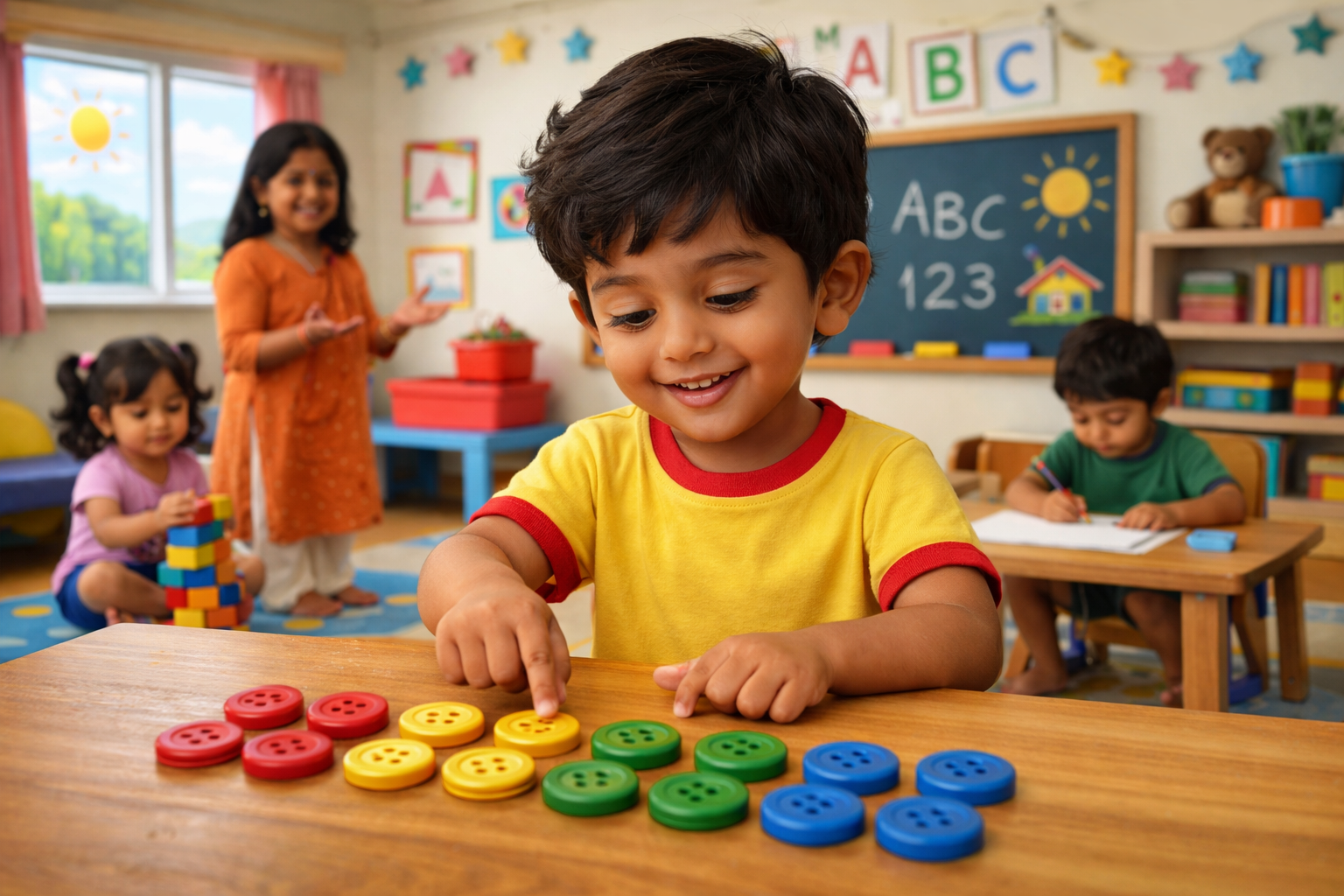
🔢 Counting with Everyday Objects
Use buttons, coins, fruits, or toy blocks to practice counting from 1 to 20. This hands-on method helps children connect numbers to real-world objects.
Step 1: Gather 20 small objects (buttons, blocks, or coins).
Step 2: Ask your child to count them one by one, placing each in a row.
Step 3: Mix them up and count again — make it a race!
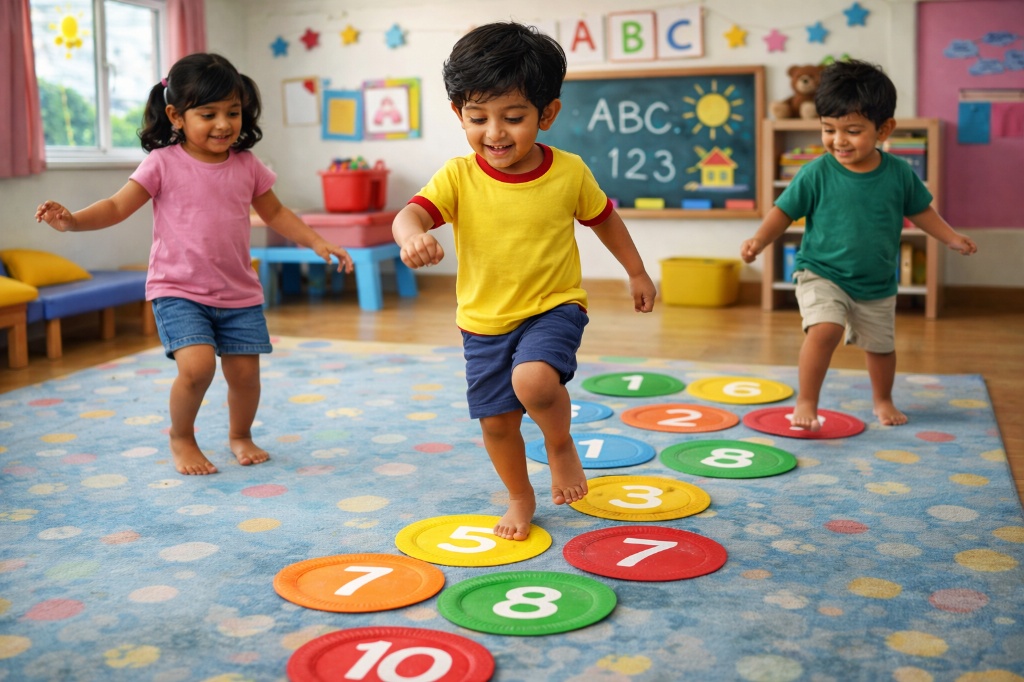
🔵 Number Hopscotch
Draw numbers 1–10 on the floor with chalk or paper plates and let kids hop on them in order. A perfect outdoor activity that combines movement with learning!
Step 1: Write numbers 1–10 on paper plates or chalk on the ground.
Step 2: Call out a number and have your child hop to it.
Step 3: Try backwards counting for an extra challenge!
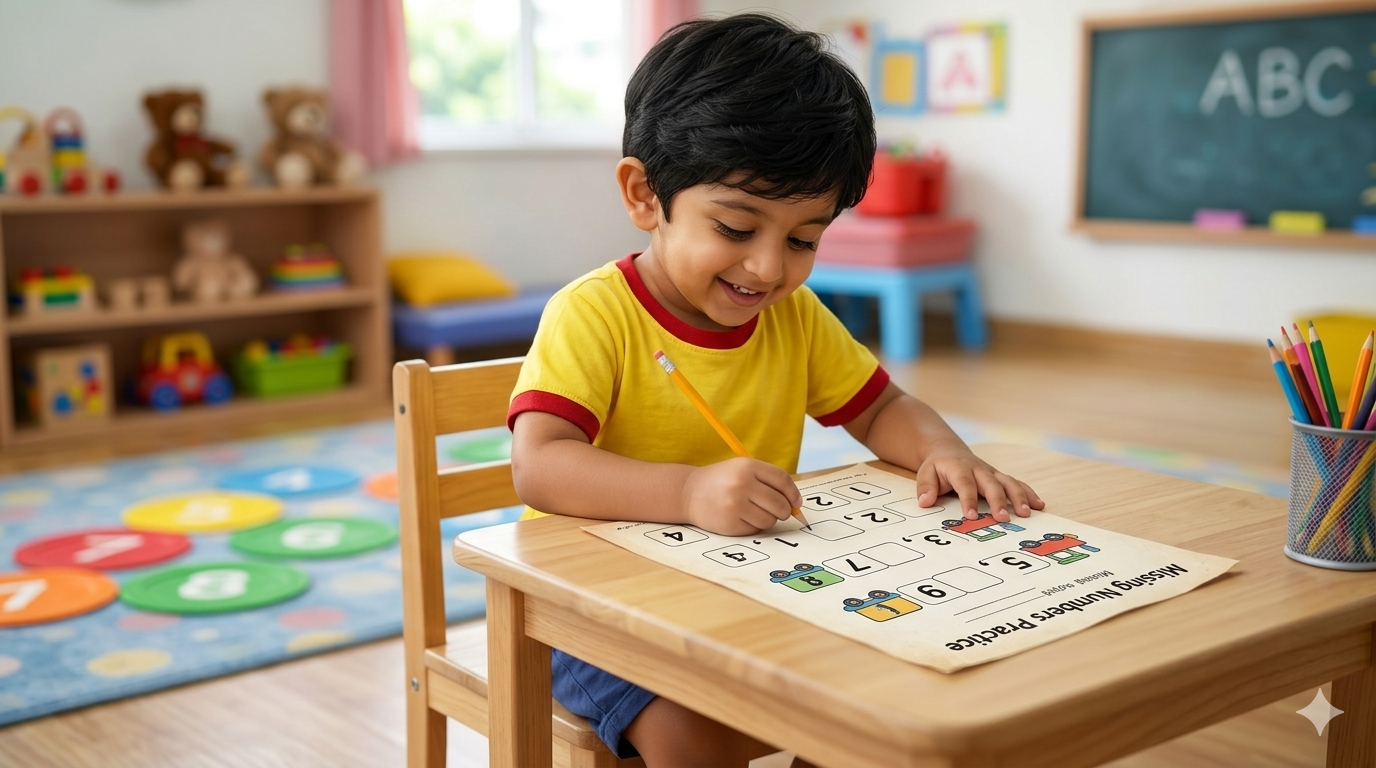
📝 Missing Numbers Worksheets
Missing number worksheets are one of the most effective ways to teach number sequencing. Kids identify the missing number in a sequence — building pattern recognition and counting skills.
Step 1: Print a free Missing Numbers worksheet.
Step 2: Ask your child to fill in the blank boxes.
Step 3: Start with 1–20, then gradually move to 1–100.
🎯 Try our Free Printable Missing Numbers Worksheets (1–100) — perfect for kindergarten and Grade 1 kids!
🎲 Dice Addition Game
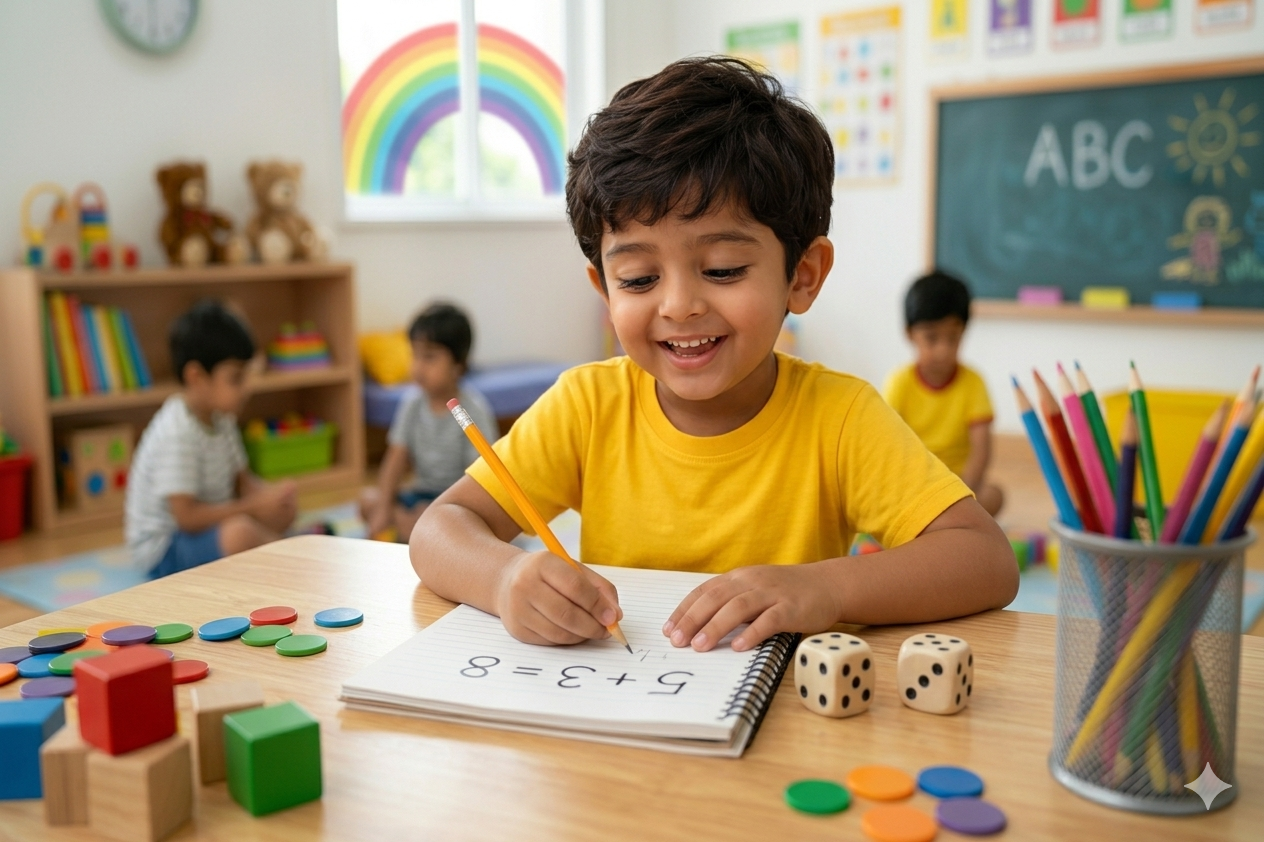
Roll two dice and add the numbers together! This simple game introduces addition concepts in a playful way that kids absolutely love.
Step 1: Give your child two dice.
Step 2: Roll both and count the total dots.
Step 3: Write the answer on paper — first to 10 correct answers wins!
📐 Shape Sorting Activity
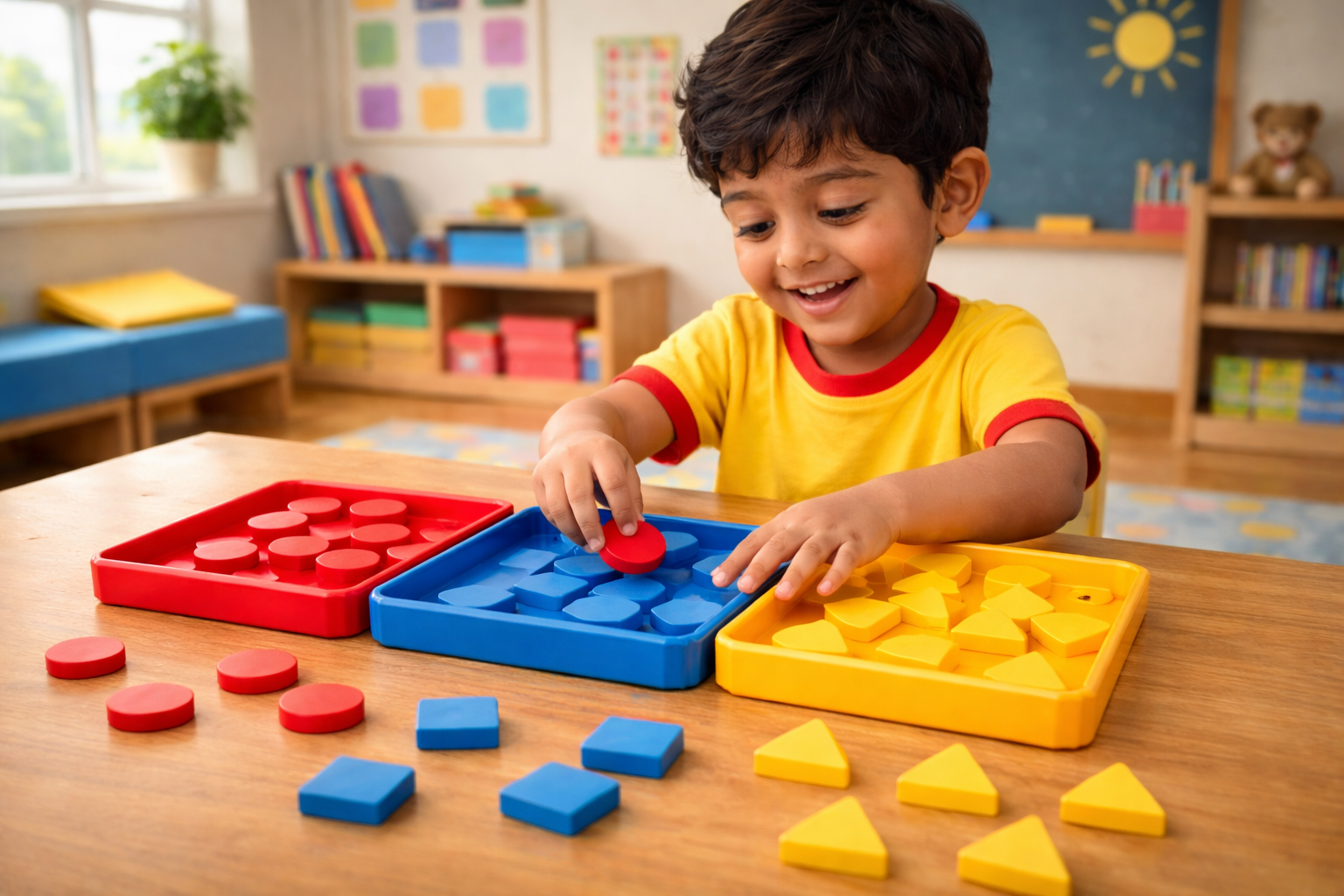
Shapes are a core part of early maths. Use household objects or printed shape cards to help kids identify circles, squares, triangles, and rectangles.
Step 1: Cut out or print different shapes in different colours.
Step 2: Ask your child to sort them by shape, then by colour.
Step 3: Count how many of each shape there are!
🎯 Download our Free Shapes Worksheets to reinforce shape recognition at home!
📄 Download Free Maths Worksheets!
Free printable maths worksheets for kindergarten — counting, missing numbers, shapes and more. No login, no sign-up needed!
✨ Download Free Worksheets →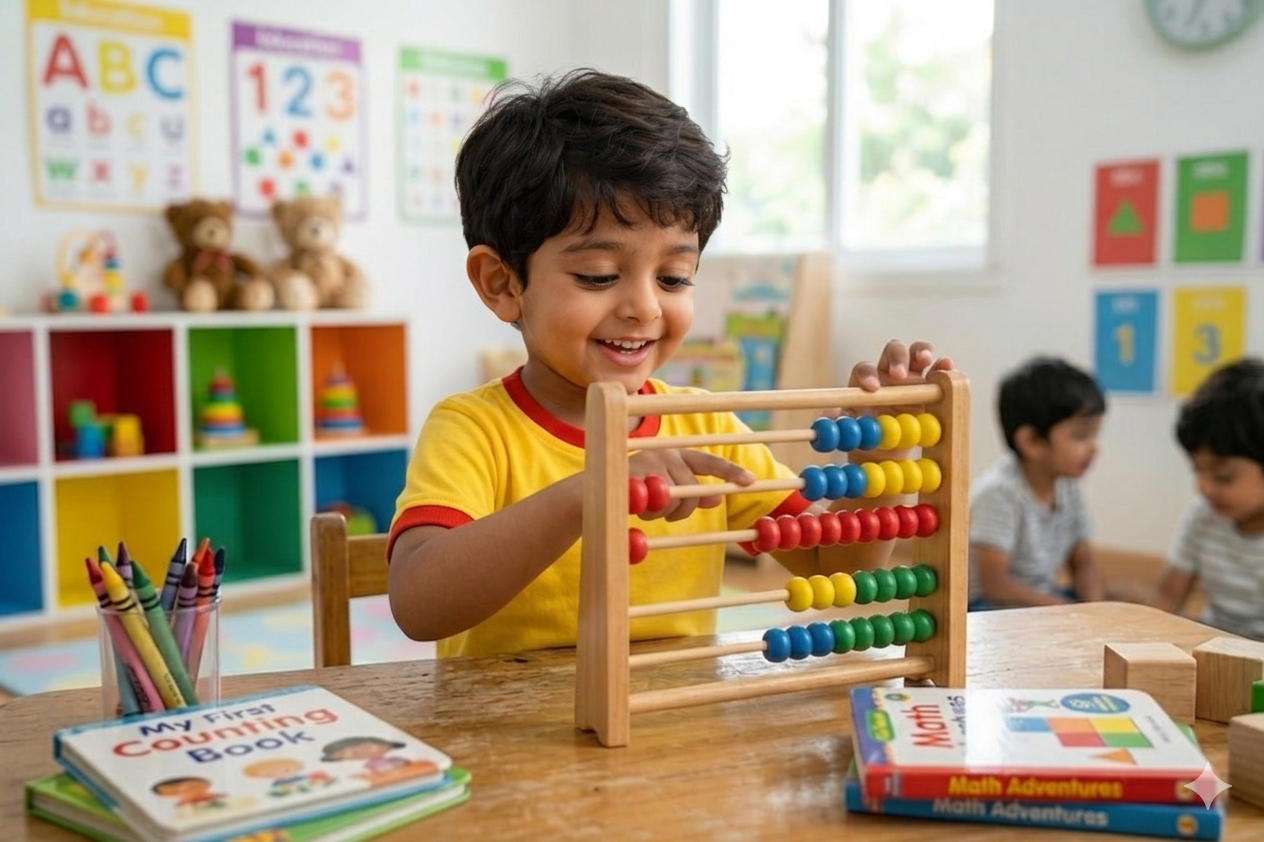
🧮 Bead Counting Abacus
Make a simple DIY abacus using a shoelace and colourful beads. This classic tool builds number sense, addition, and subtraction skills beautifully.
Step 1: Thread 10 beads onto a string or pipe cleaner.
Step 2: Push 3 beads to the right and ask: “How many are left on the other side?”
Step 3: Practice simple additions and subtractions visually.
🃏 Number Matching Card Game
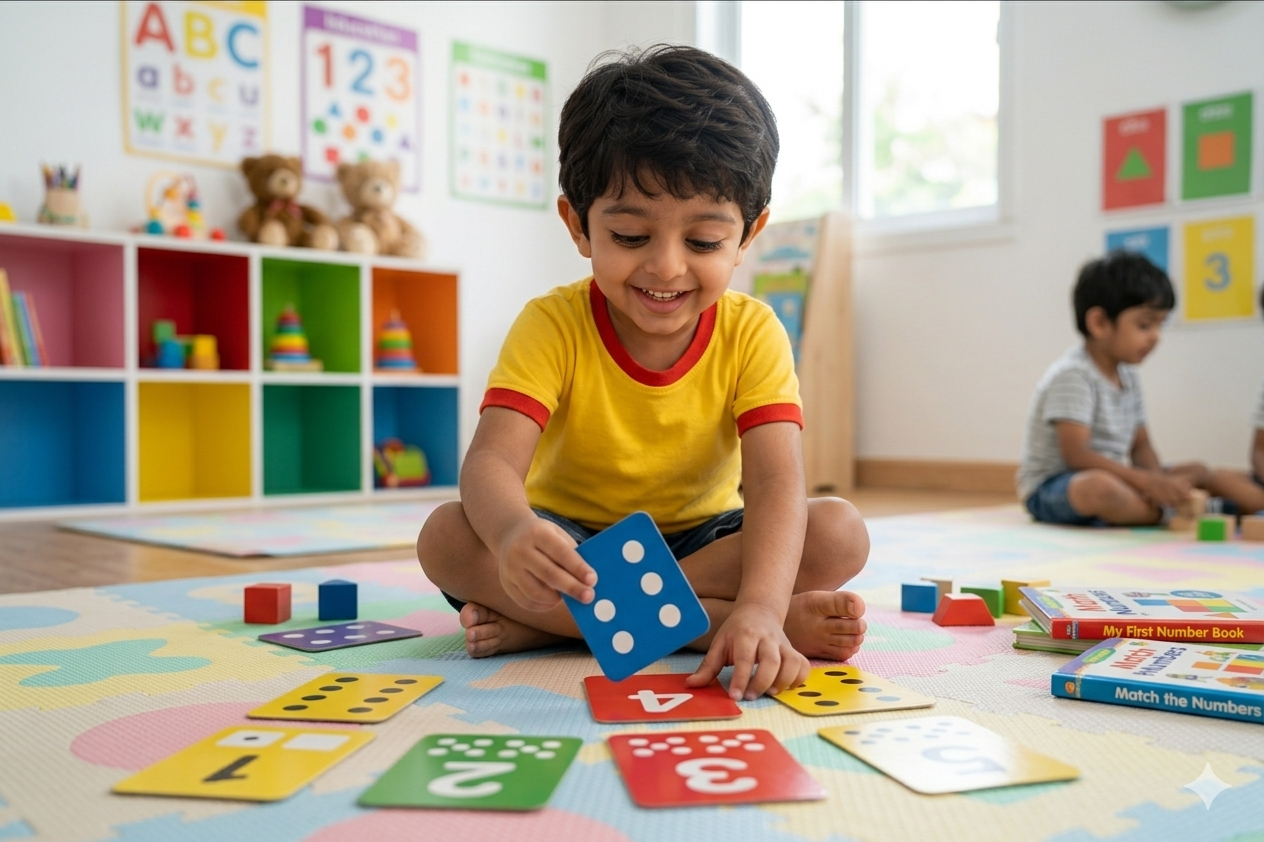
Write numbers on cards and draw matching dots on other cards. Kids match the number to the correct quantity — a fantastic memory and maths combo game!
Step 1: Create cards — one set with numbers (1–10), one set with dot groups.
Step 2: Shuffle and lay face down.
Step 3: Take turns flipping two cards — match number to dots to win the pair!
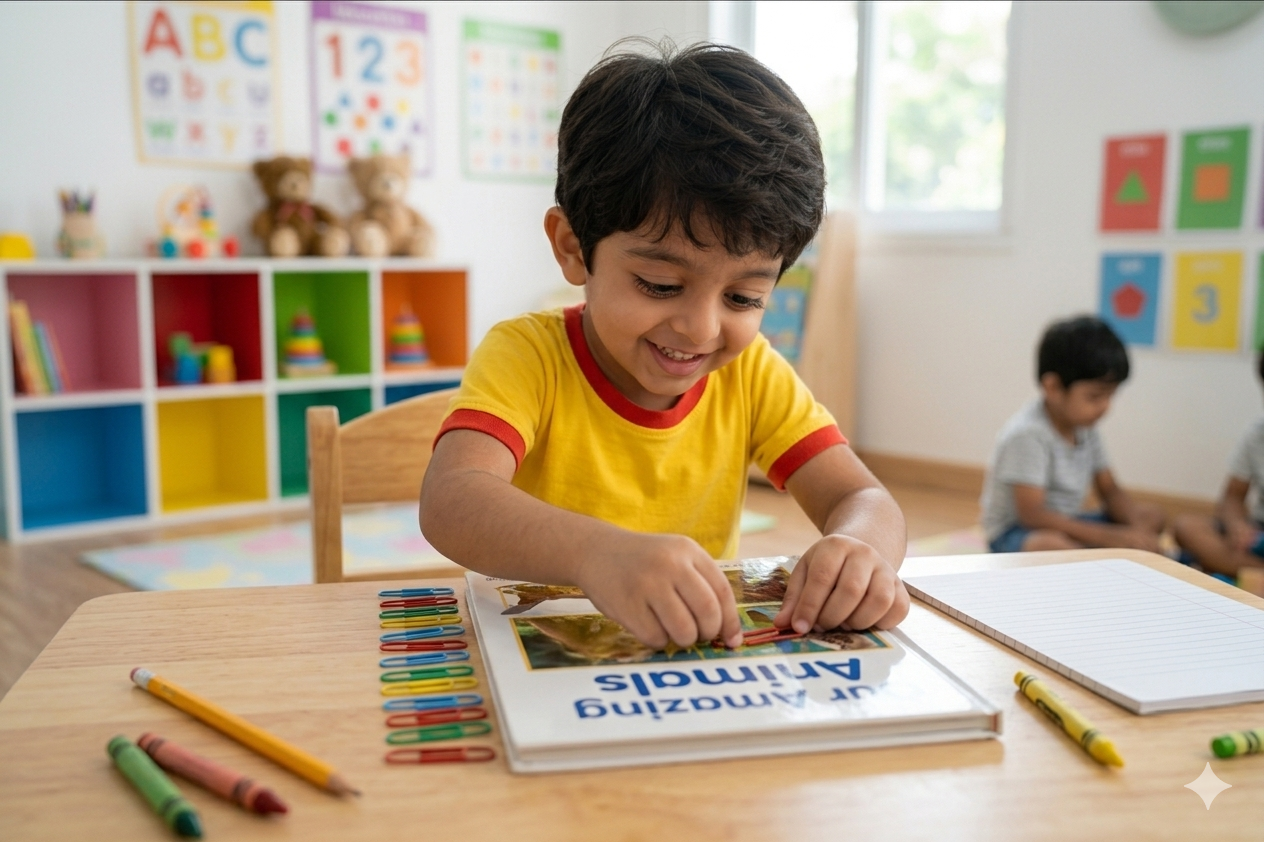
📏 Measuring with Non-Standard Units
Use paper clips, pencils, or building blocks to measure objects around the house. This introduces the concept of measurement in a fun, tangible way.
Step 1: Pick an object (a book, a shoe, a toy).
Step 2: Measure it using paper clips lined up end to end.
Step 3: Count the paper clips and write the number down.
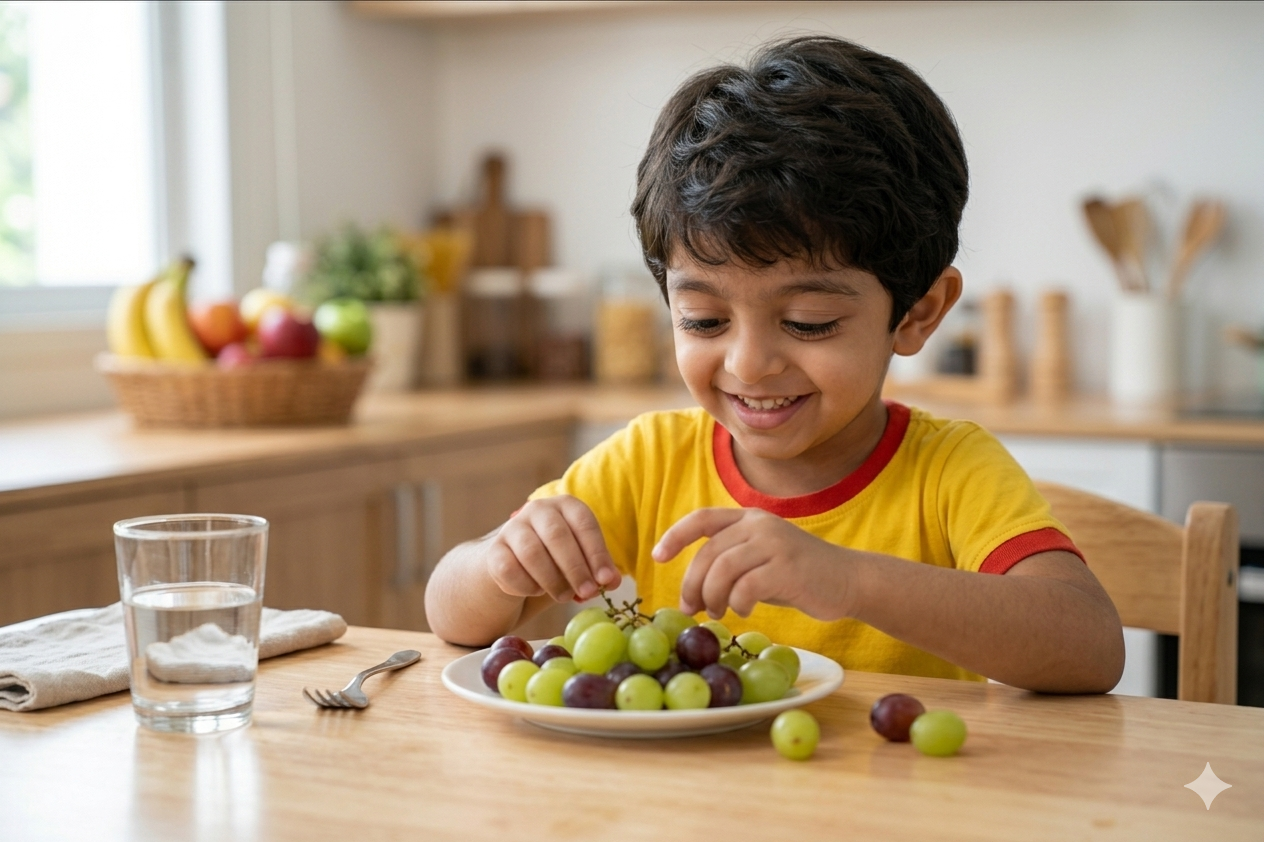
🍎 Fruit Maths Snack Time
Turn snack time into maths time! Use grapes, raisins, or crackers to practice counting, grouping, and simple addition — yummy and educational!
Step 1: Place 10 grapes on a plate.
Step 2: Ask: “If you eat 3, how many are left?”
Step 3: Let them eat the answer — instant reward!
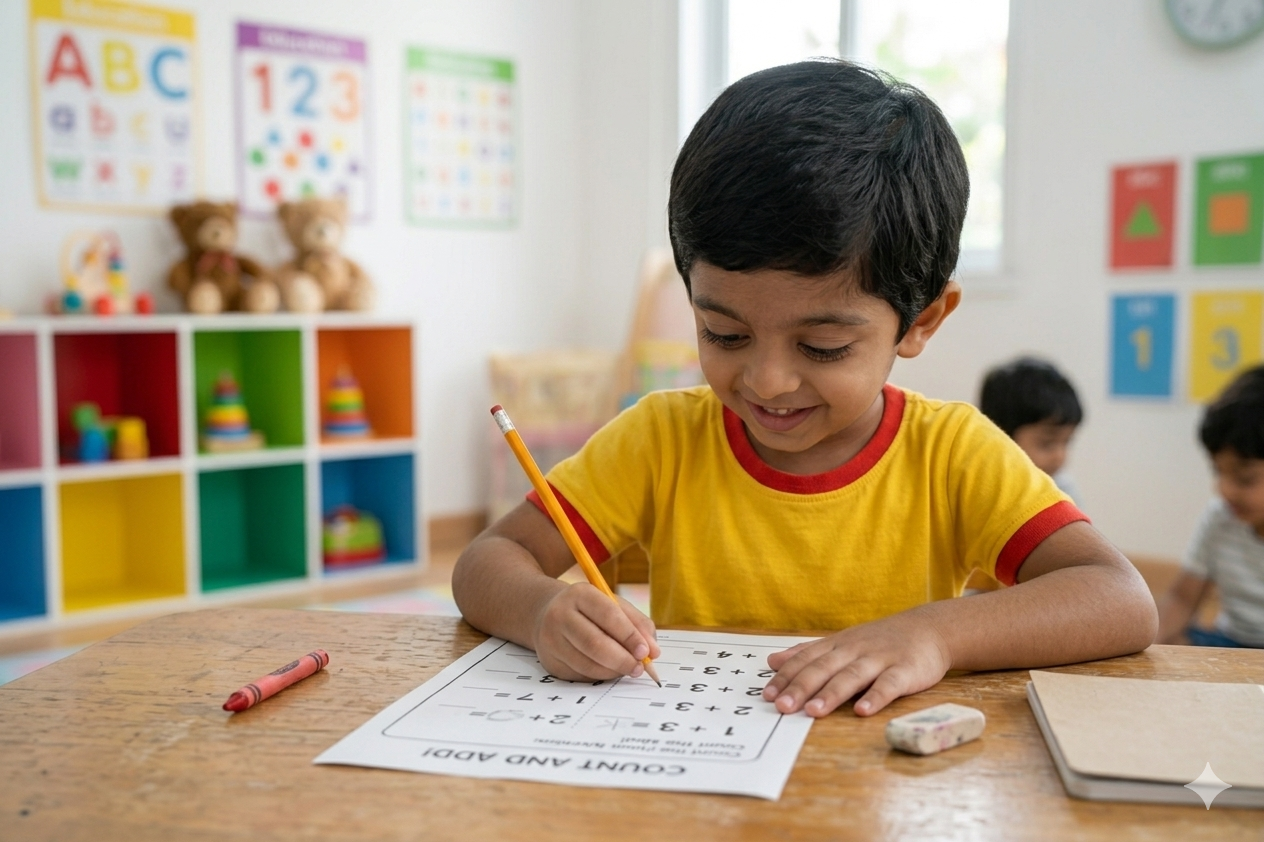
🖨️ Maths Worksheets Practice
Structured worksheet practice helps reinforce all the above concepts. Use free printable worksheets to give your child regular, focused maths practice — just 10 minutes a day makes a huge difference!
Step 1: Choose a worksheet matching your child’s current level.
Step 2: Sit together and guide them through the first few questions.
Step 3: Praise every correct answer — confidence is key!
🎯 Browse our full collection of Free Printable Maths Worksheets for kindergarten and early grade kids!
📥 Free Printable Maths Worksheets for Kindergarten
Worksheets are one of the best tools for consolidating maths learning. At KidsWorksheetLab, we offer a wide range of free, printable maths worksheets designed specifically for preschool, kindergarten, and Grade 1 children.
📥 Missing Numbers Worksheets (1–100) — Help your child learn number sequencing with themed worksheets featuring caterpillars, cakes, chicks and more!
📥 Maths Worksheets for Kids — Explore our full range of addition, subtraction, counting, and pattern worksheets — all free to download and print!
🛠️ Want a custom worksheet? Try our Free Worksheet Generator — create personalised maths worksheets in under 2 minutes!
🌈 Explore All Free Maths Worksheets!
Counting, missing numbers, shapes, addition, subtraction — all free, all printable, all designed for kindergarten kids!
✨ Browse Free Worksheets →💡 Expert Tips for Parents and Teachers
✅ Keep Sessions Short and Fun
Kindergarten kids have short attention spans. Aim for 10–15 minutes of focused maths activity per day. Finish on a positive note so they always look forward to the next session.
✅ Celebrate Small Wins
Every correct answer deserves praise! Positive reinforcement builds maths confidence early. Use stickers, stamps, or a simple “high five” to celebrate progress.
✅ Make it Part of Daily Life
Count steps while climbing stairs, count fruits while grocery shopping, or count cars on the road. Maths is everywhere — help your child see it! For children with special needs, also check our free Autism Resources for visual learning tools.
✅ Use Printable Worksheets for Structured Practice
Combine hands-on activities with structured worksheet practice for the best results. Worksheets help reinforce what children have learned through play.
❓ Frequently Asked Questions
What maths skills should a kindergarten child know?
How much time should I spend on maths with my kindergartener each day?
Are printable worksheets good for kindergarten maths?
What is the best way to teach missing numbers to kids?
Can I create custom maths worksheets for my child?
🌟 Final Thoughts
Maths doesn’t have to be scary or boring for kindergarten kids! With the right activities, a little creativity, and consistent practice, every child can build a strong and confident maths foundation.
Try one or two of these activities this week, and combine them with our free printable worksheets for the best results. Remember — the goal at this stage is not perfection, but curiosity, confidence, and love of learning!
Happy Learning! 🎉
👉 Missing Numbers Worksheets (1–100) — Free & Printable
👉 Maths Worksheets for Kids — Browse Full Collection
👉 Shapes Worksheets — 2D & 3D Free Printables
👉 Free Autism Resources — Visual Schedules, Charts & PDFs
👉 Worksheet Generator — Custom Worksheets for Kids
🚀 Ready to Make Maths Fun?
Download your free maths worksheets for kindergarten now — no login, no sign-up, completely free. Print and start today!
✨ Download Free Maths Worksheets →Kya yeh guide aapke kaam aayi? Neeche comment mein zaroor batayein:
- 👉 Aapke bachche ko kaun sa maths activity sabse zyada pasand aaya?
- 👉 Kya counting aur numbers seekhne mein worksheets helpful lagin?
- 👉 Koi aur resource chahiye jo hum bana sakte hain?
Aapka ek comment hume aur better content banane mein help karta hai! 💛
Disclaimer: This post contains affiliate links. If you purchase through these links, we may earn a small commission at no extra cost to you. All product recommendations are based on educational value and are chosen to genuinely help children learn. Thank you for supporting KidsWorksheetLab! 💛