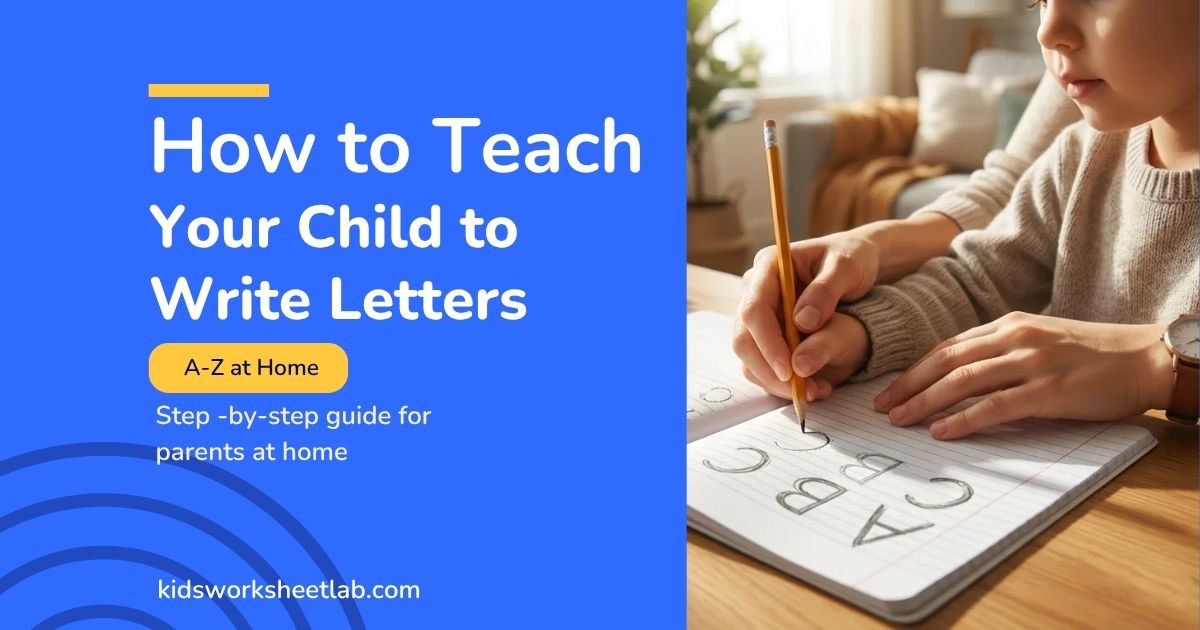
Most children are ready to start writing letters between ages 3.5 to 5 years. Look for these signs of readiness:
- Your child can hold a crayon or pencil with some control
- They show interest in drawing shapes and lines
- They can sit focused for at least 5–10 minutes
- They recognise some letters from books or environment
You don’t need to spend a lot! Here’s a simple list:
- Thick crayons or pencils — easier to grip for young children
- Letter tracing worksheets — free printables from KidsWorksheetLab.com!
- A flat, comfortable table — proper posture matters
- Erasers — encourage correction without frustration
- Stickers for reward — great motivation for kids!
Before writing letters, your child must learn the correct “Tripod Grip”:
- Hold the pencil between the thumb and index finger
- Rest it on the middle finger for support
- Keep the grip light — not too tight
- Pencil rests near the large knuckle

Before jumping to letters, practice these basic strokes. Most letters are made from combinations of these shapes:
- Horizontal lines ———
- Vertical lines |||
- Diagonal lines / \
- Circles and curves O C
- Zigzags \/\/
Practice these for 5–7 days before starting actual letters. This builds motor memory and makes letter writing much easier!
Don’t start from A straight to Z! Group letters by shape — it’s much more effective:
Group 1 — Straight Lines
Group 2 — Curves & Circles
Group 3 — Mixed Lines + Curves
Group 4 — Diagonal Letters
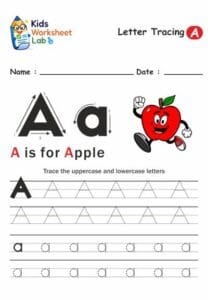
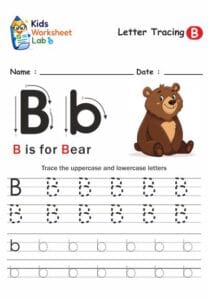
Tracing is the best way for young children to learn letter formation. Here’s a simple daily routine:
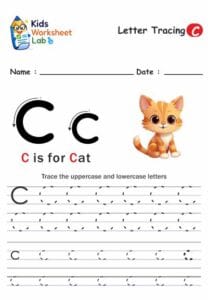
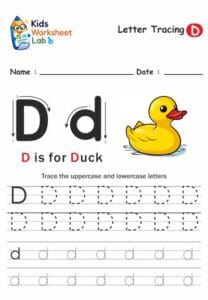
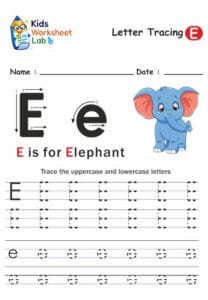
- Print one letter tracing worksheet per day
- Let your child trace the letter with their finger first
- Then trace with a pencil following the dotted lines
- Ask them to write the letter on their own 3–5 times
- Draw something starting with that letter for fun!
Kids learn best when they’re having fun! Here are some creative activities:
- Sand Writing: Fill a tray with sand — let your child write letters with their finger
- Chalk Writing: Write giant letters on the driveway with chalk
- Play-Doh Letters: Shape letters using Play-Doh for a tactile experience
- Letter Hunt: Find letters in books, signs, and packaging around the house
- Alphabet Songs: Sing the ABC song while tracing each letter
- Dot-to-Dot Worksheets: Available free at KidsWorksheetLab.com!
Young children have short attention spans. Follow these daily time guidelines:
- Age 3–4: 5–10 minutes per day
- Age 4–5: 10–15 minutes per day
- Age 5–6: 15–20 minutes per day
- Praise effort, not just the result — “You tried so hard!” works best
- Create a progress chart with star stickers for each letter mastered
- Never compare your child to other children
- Celebrate milestones — after every 5 letters, do something special
- Keep the atmosphere positive and pressure-free
- Do a weekly “Letter Review” — mix up letters already learned
- Use missing letter worksheets to test knowledge
- Try writing simple 3-letter words (cat, bat, hat)
- Read alphabet books together every night
Here’s a simple week-by-week plan to help you stay on track:
| Week | Focus |
|---|---|
| Week 1–2 | Pre-writing strokes, pencil grip & letter recognition games |
| Week 3–4 | Group 1 letters (L, I, T, E, F, H) with tracing worksheets |
| Week 5–6 | Group 2 letters (O, C, G, Q, S) with fun activities |
| Week 7–8 | Group 3 letters (B, D, P, R, U, J) and daily revision |
| Week 9–10 | Group 4 letters (A, K, M, N, V, W, X, Y, Z) |
| Week 11–12 | Full A-Z review, lowercase letters & simple words |
Teaching your child to write letters at home is a beautiful journey. With patience, consistency, and a little creativity, your child will be writing A to Z with confidence before you know it!
Remember — every child learns at their own pace. The most important thing is to make learning a joyful experience. Keep it fun, keep it simple, and enjoy every moment of watching your little one grow! 💛
🖨️ Ready to Start?
Download our FREE A-Z Letter Tracing Worksheets — No Sign-Up Needed!
👉 Get Free Worksheets Now